
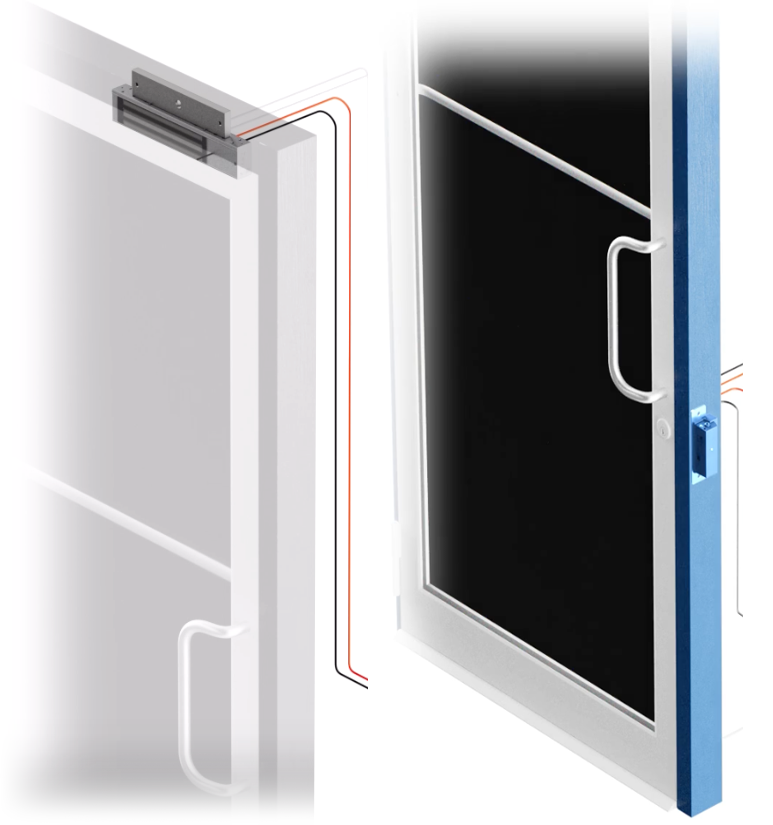
What are electric and magnetic locks?
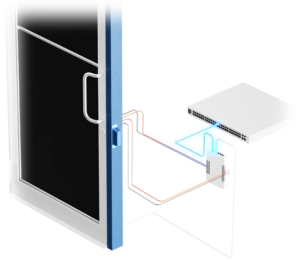
Electric Locks (Electric Strike)
An electric lock replaces the standard door plate in the frame. When the lock is activated via a controller (such as UniFi Access), the lock is temporarily released so that the door can be opened.
Features:
- Built into door frame
- Works with existing mechanical locks
- Suitable for interior doors and exterior doors
- Quiet and discreet
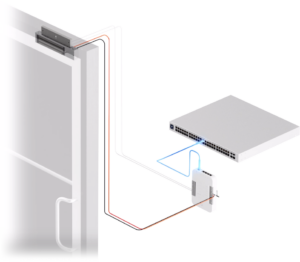 Magnetic Locks (Maglocks)
A magnetic lock uses a powerful electromagnet to hold a metal plate on the door.
Features:
- Strong magnetic force (up to hundreds of kg of pull)
- Visibly mounted on door or frame
- Very safe with power supply
- Often used in glass or entrance doors
Fail-Safe vs Fail-Secure Explained
In access control, it is essential to understand how a lock behaves in the event of power outages.
🔓 Fail-Safe (safe in case of power failure)
A fail-safe lock automatically unlocks when the power goes out.
How does it work?
Power = door is locked
No power = door opens
Examples:
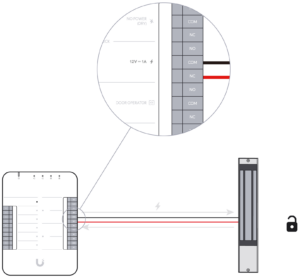
Magnetische sloten (maglocks) Locked State: When connected to the NC (Normally Closed) and COM (Common) terminals of a hub’s powered relay, electric current flows through the lock. This keeps the lock engaged and secure.
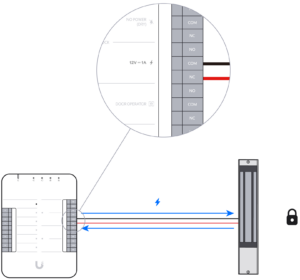
Magnetische sloten(maglocks) Unlocked State: When an unlock event is triggered, the relay switches to the open position, interrupting the flow of electricity. The lock then releases, transitioning to the unlocked state.
Pros:
Safe in emergency situations (fire, evacuation)
Often meets safety standards for escape routes
Cons:
Less security in the event of power failure
Not suitable for high-security zones
🔒 Fail-Secure (safe in case of malfunction)
A fail-secure lock remains locked when the power goes out.
How does it work?
Power = door opens
No power = door remains closed
Examples:
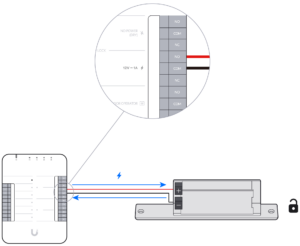
Elektrische strikes Locked State: When connected to the NO (Normally Open) and COM (Common) terminals of a hub’s powered relay, no electric current flows through the lock. This keeps the lock in its locked position.
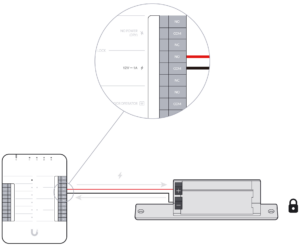
- Elektrische strikes Unlocked State: When an unlock event is triggered, the relay switches to the closed position, allowing electric current to flow through the lock. This energizes the lock and transitions it to the unlocked state.
Pros:
High security in the event of power failure
Suitable for access-restricted areas
Cons:
Additional emergency release needed
Not always suitable for escape routes
Comparison: Electric Strike vs Maglock
| Eigenschap | Elektrische Strike | Magnetisch Slot |
|---|---|---|
| Operation | Mechanical unlocking | Magnetic Force |
| Fail-type | Fail-secure | Fail-safe |
| Security level | High | High (depending on power source) |
| Energy consumption | Low | Continuous power needed |
| Usage | Door frames | Glass/metal doors |
| Emergency situation | Usually stays closed | Opens automatically |
| Installation | In window frame | On surface |
Integration with UniFi Access
Within the UniFi ecosystem, locks work together with:
- UA-Door-Hub / UA-Gate-Hub
- UniFi Access Readers
- UniFi G6 Entry intercom
- UniFi Access software
The controller determines when the lock is activated, for example via:
- NFC card
- Face unlock
- Mobile app
- PIN code
- Timetables
Which one do you choose?
Choose an electric strike (fail-secure) if:
You want maximum security
You secure an office or server space
You want the door to stay closed in the event of power outages
Choose a maglock (fail-safe) if:
Safety is more important than security
Your escape routes or public areas manage
You have a glass door or modern entrance
Important points of attention
Escape routes often have to be fail-safe according to legal regulations (find out which regulations are used in your country)
Maglocks often require extra emergency buttons
Electric strikes are better for controlled access
UPS backup is highly recommended for both systems
More information is available via the official website of Ubiquiti.